
Oslo
Discover Oslo through its waterfront landmarks, historic neighbourhoods, cultural highlights and everyday city life. Explore Norway’s capital at your own pace or through guided experiences tailored to your visit.
About Oslo
Oslo sits at the head of the Oslofjord, with islands, parks and forested hills all within easy reach of the city centre. Norway’s capital combines historic landmarks and established neighbourhoods with contemporary architecture, major museums and a waterfront that has changed significantly in recent decades.
Much of Oslo’s appeal comes from this contrast between city life and nature. You can spend the morning exploring museums and historic streets, walk along the harbour through modern districts such as Bjørvika and Aker Brygge, or take a ferry out into the inner Oslofjord. Beyond the best-known sights, Oslo’s neighbourhoods each have their own character, from the cafés and independent shops of Grünerløkka to the elegant streets and green spaces around Frogner.
Highlights of Oslo
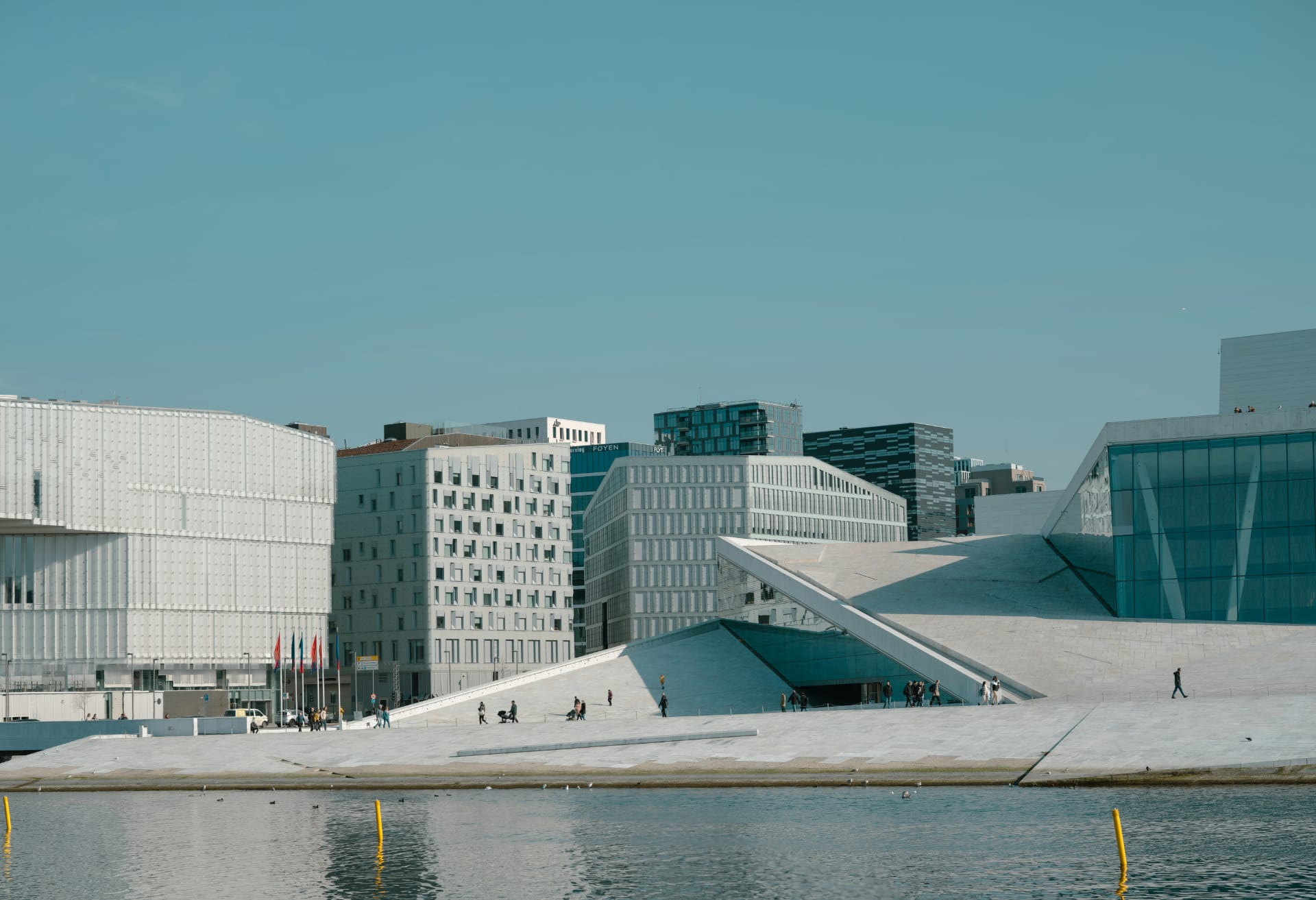
The Oslo Opera House
Rising from the waterfront in Bjørvika, the Oslo Opera House is one of the city’s best-known modern landmarks. Walk up its sloping roof for views across the harbour and Oslofjord.
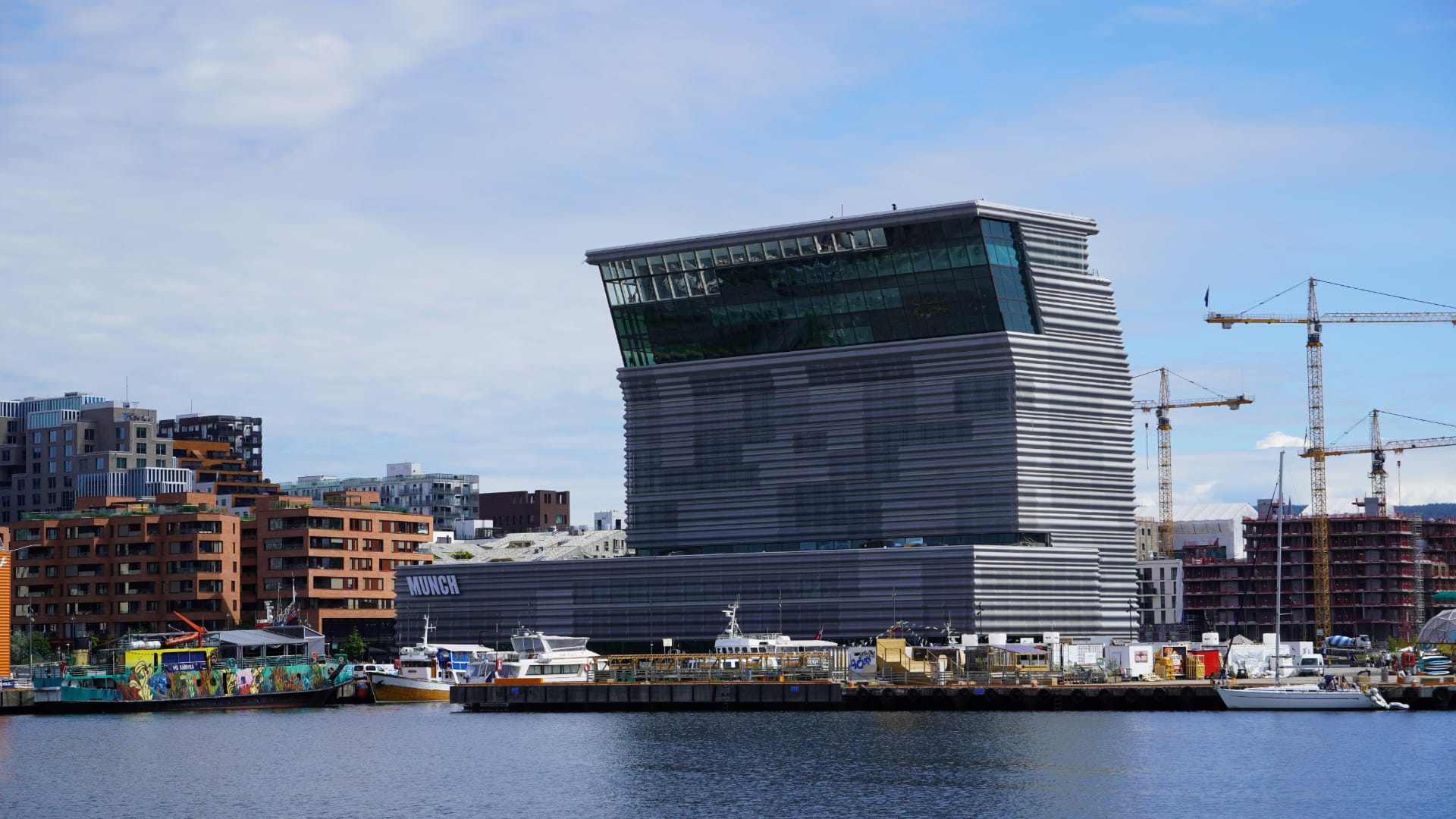
Munch Museum
MUNCH explores the life and work of Edvard Munch through paintings, prints, drawings and changing exhibitions. A version of his most famous motif, The Scream, is always on display. Munch
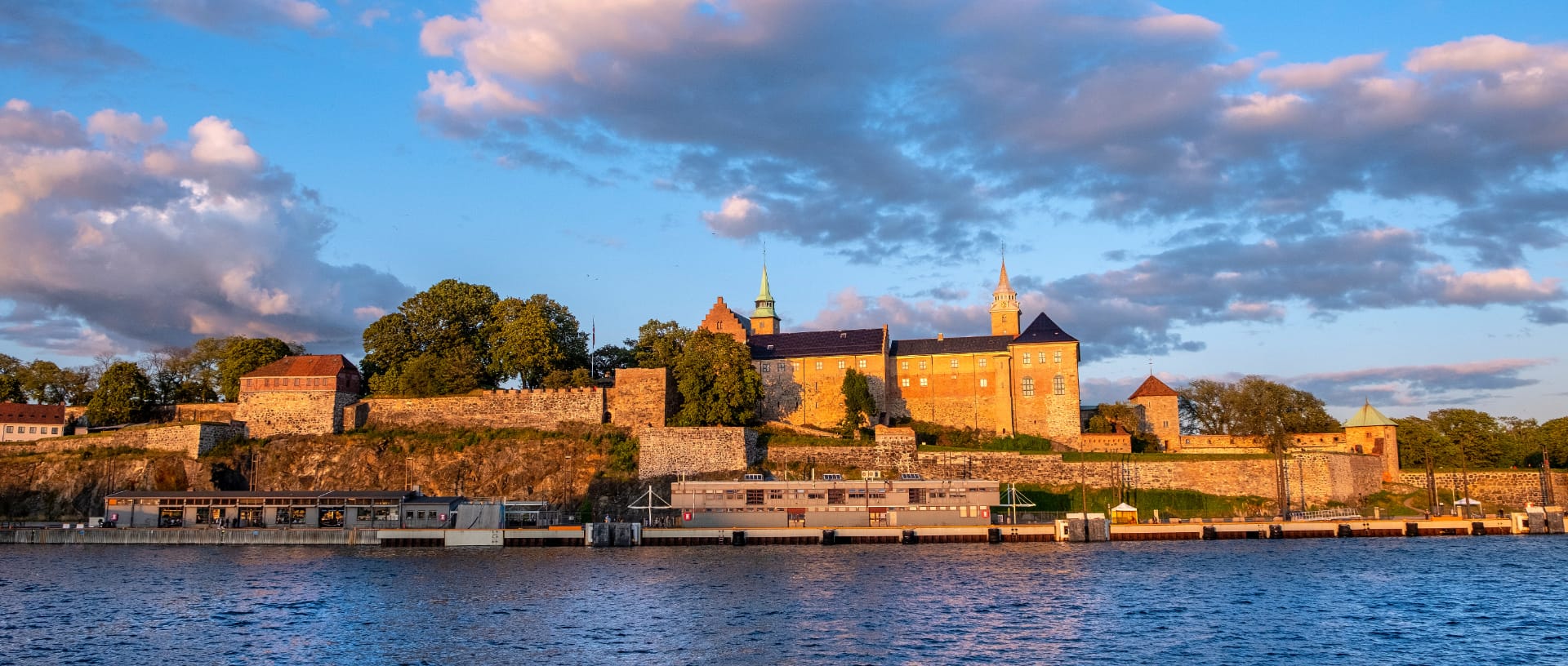
Akershus Fortress
Overlooking Oslo harbour, Akershus Fortress has guarded the city since the Middle Ages. Its historic buildings, grounds and waterfront setting offer an introduction to Oslo’s royal and military history.
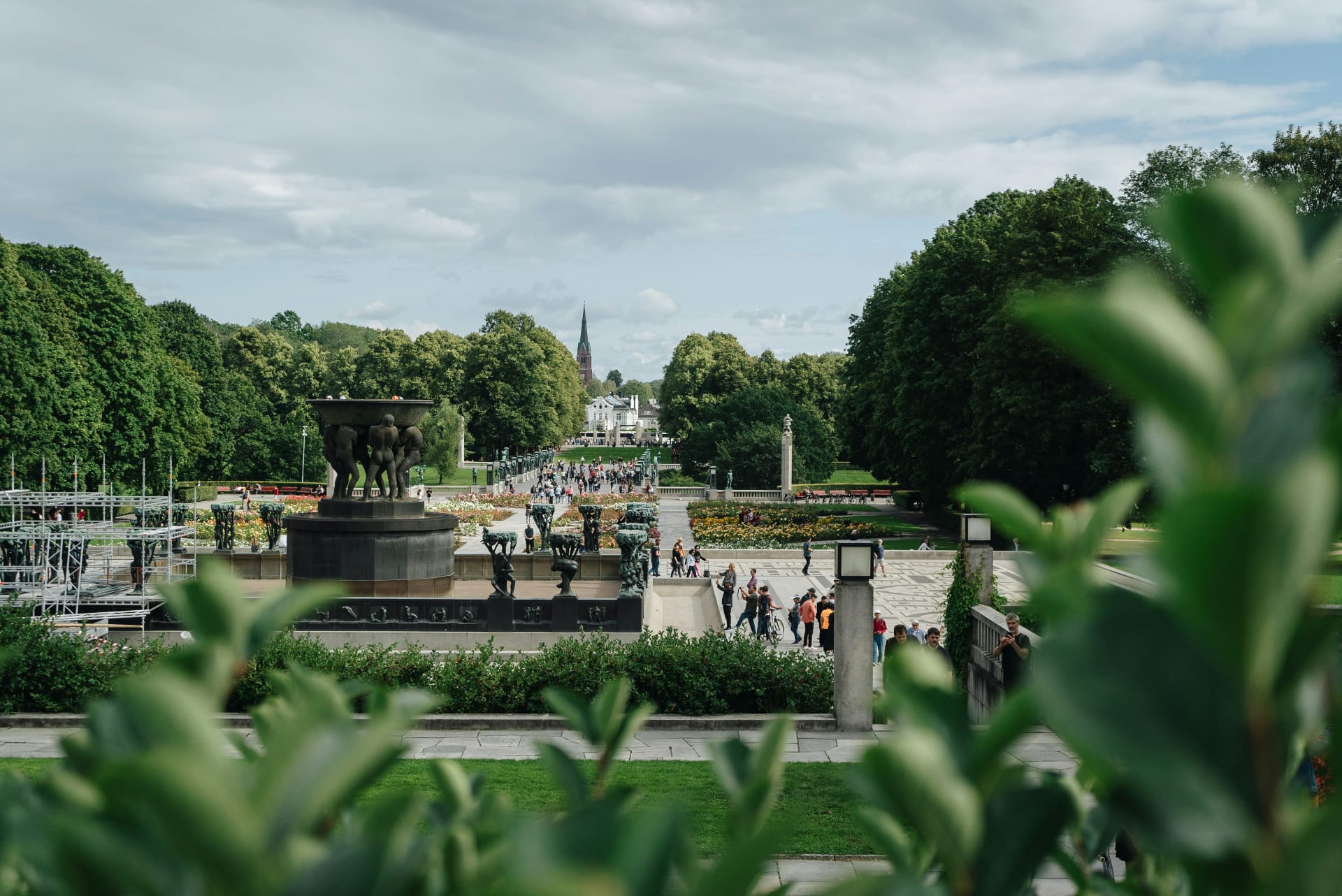
Vigeland Sculpture Park
Set within Frogner Park, the Vigeland installation brings together more than 200 sculptures by Gustav Vigeland. The works are spread through bridges, gardens and open spaces in one of Oslo’s most popular parks.
Aker Brygge & Tjuvholmen
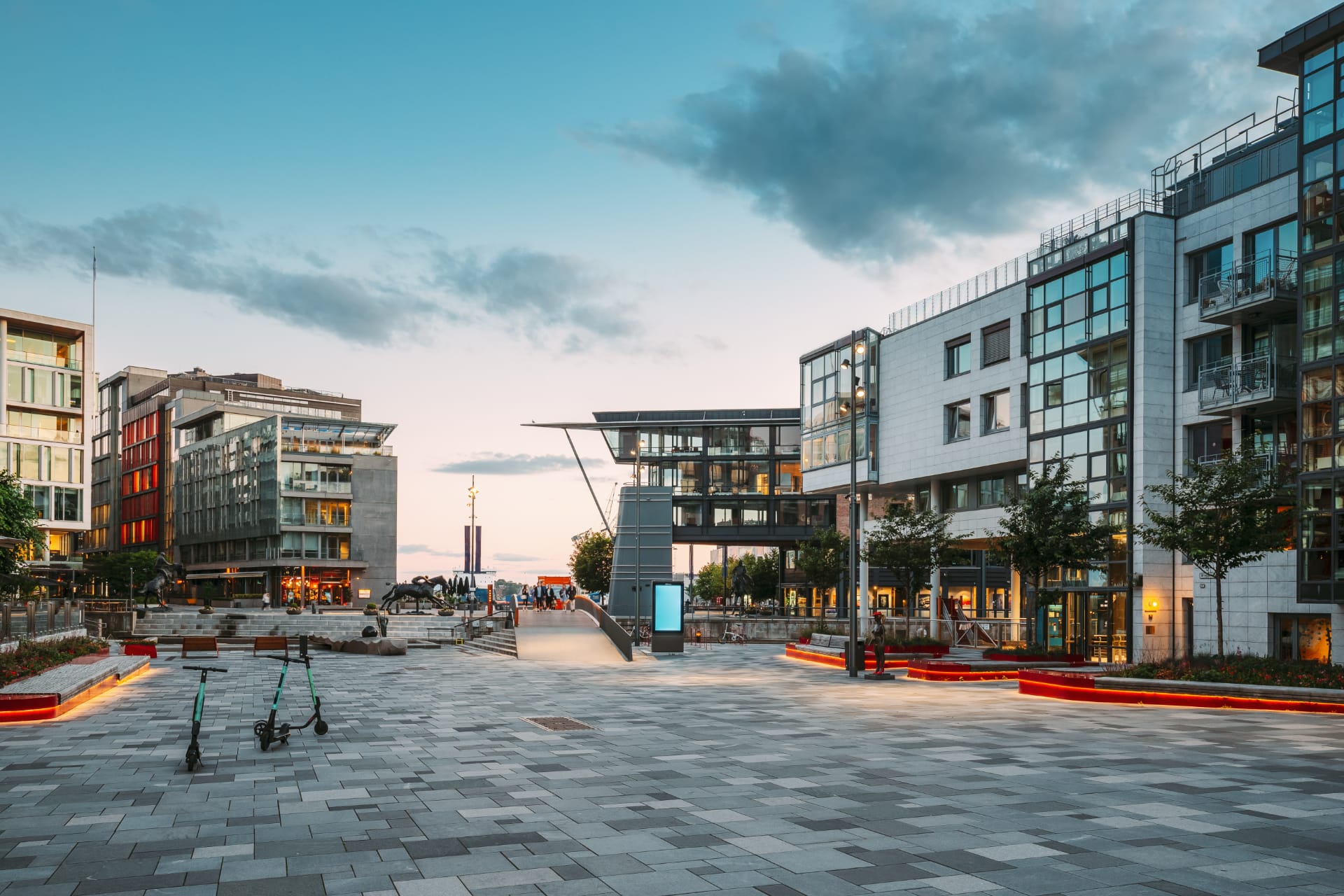
These neighbouring waterfront districts combine harbour promenades, restaurants, contemporary architecture and galleries. They are particularly pleasant for a walk along the fjord, with views towards the city centre and Akershus Fortress.
Aker Brygge & Tjuvholmen
These neighbouring waterfront districts combine harbour promenades, restaurants, contemporary architecture and galleries. They are particularly pleasant for a walk along the fjord, with views towards the city centre and Akershus Fortress.
Explore Oslo’s neighbourhoods
Oslo is compact enough that several of its most distinctive neighbourhoods can be explored in the same day, yet each has a noticeably different character. From the contemporary waterfront at Bjørvika to the older streets of Kvadraturen and the cafés of Grünerløkka, exploring beyond the main landmarks is one of the best ways to understand the city.
Bjørvika
Bjørvika has become one of the most recognisable parts of modern Oslo. Once dominated by port infrastructure and major roads, the waterfront has been transformed into a public district of museums, restaurants, residential buildings and striking contemporary architecture. The Oslo Opera House and MUNCH are the best-known landmarks, while the Barcode buildings and newer waterfront developments give the area a distinctly modern feel. It is also an easy place to explore on foot, with promenades connecting the harbour to Oslo Central Station and the historic centre. VisitOSLO
Kvadraturen
Just west of Bjørvika lies Kvadraturen, Oslo’s historic centre. The district takes its name from the rectangular street plan created when the city was rebuilt after the fire of 1624. Today, its streets contain some of Oslo’s oldest surviving buildings alongside galleries, cafés and newer cultural spaces. Christiania Torv sits at the heart of the area, while Akershus Fortress forms its southern edge. Kvadraturen is particularly rewarding to explore on foot because traces of several periods of Oslo’s history sit within a relatively small area.
Grünerløkka
North-east of the city centre, Grünerløkka offers a more informal side of Oslo. Once a working-class and industrial neighbourhood, it is now known for independent shops, vintage stores, cafés, restaurants and a lively local atmosphere. Thorvald Meyers gate runs through the heart of the district, while parks such as Birkelunden and Sofienbergparken provide green spaces between the surrounding streets. The nearby Akerselva river also offers a pleasant walking route past former industrial buildings, cultural venues and Mathallen food hall. VisitOSLO
Frogner
Frogner shows a quieter and more residential side of the city, with broad streets, decorative architecture, cafés and some of Oslo’s best-known green spaces. Frogner Park dominates the area and contains the Vigeland sculpture installation, but the surrounding neighbourhood is worth exploring beyond the park itself. Streets around Frogner and Bygdøy allé are characterised by older residential buildings, galleries, shops and restaurants, while the area connects naturally towards the Royal Palace, Majorstuen and the western side of Oslo.
Oslofjord and nature
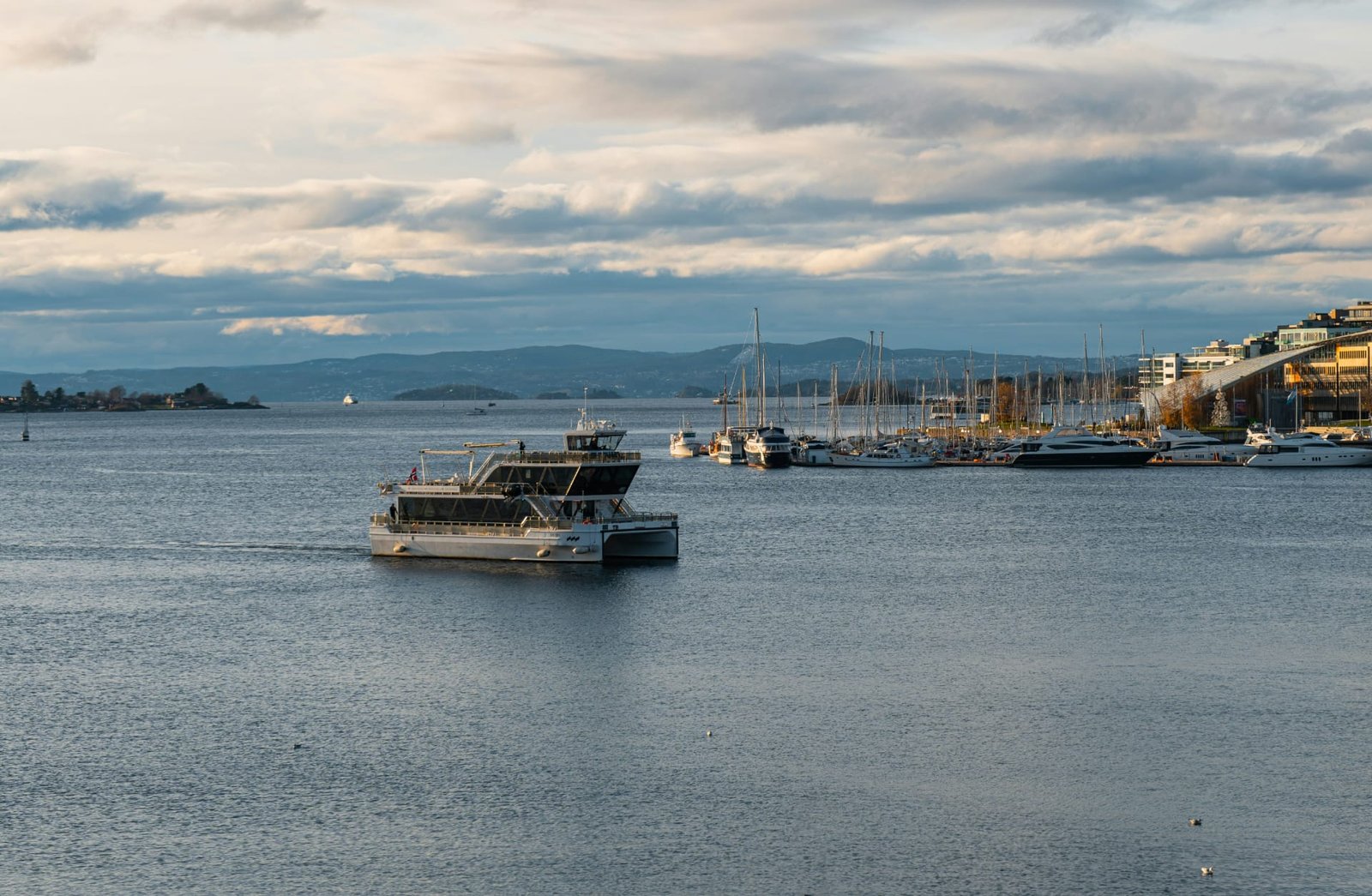
One of Oslo’s defining qualities is how closely the city is connected to nature. The Oslofjord begins just beyond the waterfront, with islands, beaches and coastal scenery all within easy reach of the centre. Ferries from the harbour make it possible to leave the city streets behind and spend a few hours exploring the inner fjord.
Nature also extends inland. Parks, riverside paths and forest trails are part of everyday life in Oslo, while areas around Holmenkollen provide easy access to the wooded hills surrounding the capital. The Akerselva river offers another way to experience the city, passing through green spaces, former industrial districts and several neighbourhoods on its way towards the centre.
How long to spend in Oslo?
Whether you're visiting for a single day or a long weekend, Oslo offers plenty to discover. Its compact centre makes it easy to explore the main attractions on foot, while an extensive network of trams, buses, metro lines and ferries connects you to places further away. A longer stay allows you to experience more of the city's culture, neighbourhoods and surrounding nature at a relaxed pace.
One day in Oslo
Spend your day exploring the historic centre and waterfront. Visit the Oslo Opera House, discover Akershus Fortress and walk along the harbour towards Aker Brygge. If time permits, stop at a museum or explore one of the nearby neighbourhoods.
Two days in Oslo
With an extra day, you can explore at a more relaxed pace. Visit MUNCH or Vigeland Sculpture Park, wander through Grünerløkka's independent shops and cafés, or spend time discovering the quieter streets of Frogner.
Three days or more
A longer visit gives you time to experience Oslo beyond the city centre. Take a ferry to the Oslofjord islands, explore the museums of Bygdøy or visit Holmenkollen and the surrounding forests for a different perspective on the capital.